Padel Summer 2026: 7 Tips to Play Better and Improve Faster
How to improve at padel this summer? Discover 7 concrete tips to play smarter, recover better, avoid classic mistakes, and level up quickly.
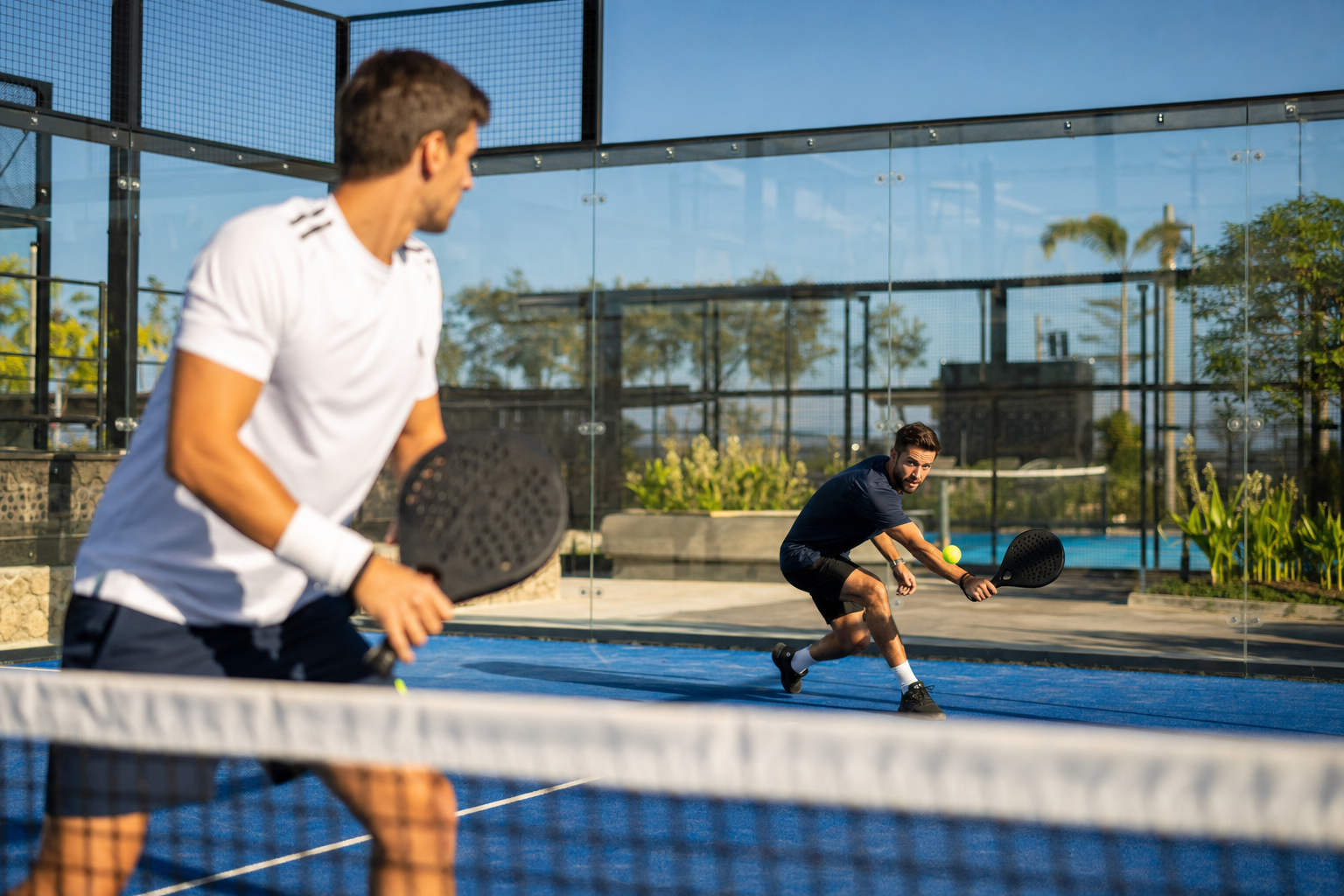
Summer is usually the time when you play the most padel. Days are longer, tournaments pile up, courts are packed, and motivation spikes. But it's also the season where many players make a simple mistake: playing more without actually improving.
In 2026, padel continues to accelerate across Europe and beyond. The International Padel Federation tracks steady growth in courts, clubs, and licensed players year after year. If you want to use the summer to genuinely level up, playing more matches isn't enough. You need to play with intent, understand your game better, and fix the mistakes that keep coming back.
Here are 7 concrete tips to play better at padel this summer and improve faster.
1.Don't play more — play with a clear intention
The trap of accumulating matches
The summer trap is playing match after match "just to play," without stepping back. You gain rhythm, sure. But if you keep playing the same way, you often reinforce the same flaws. This is one of the most common obstacles covered in our article on the most common padel mistakes.
One objective per match
Before each session, set yourself one single improvement focus:
- defending better off the back glass
- playing higher and slower when under pressure
- improving lob depth and consistency
- moving to the net at the right moment
- communicating better with your partner
One focus is enough. If you try to change everything at once, nothing changes.
The International Padel Federation and sports science research both recommend structured practice with clear per-session goals for lasting improvement. Targeted work on specific weaknesses produces better results than simply stacking matches.
2.In summer, your level depends on how you handle the heat
What heat does to your game
When temperatures rise, your game changes. You lose sharpness faster, your positioning suffers, decision quality drops, and you start forcing shots unnecessarily. These physical signals have a direct impact on tactical choices.
Hydration and adjustment
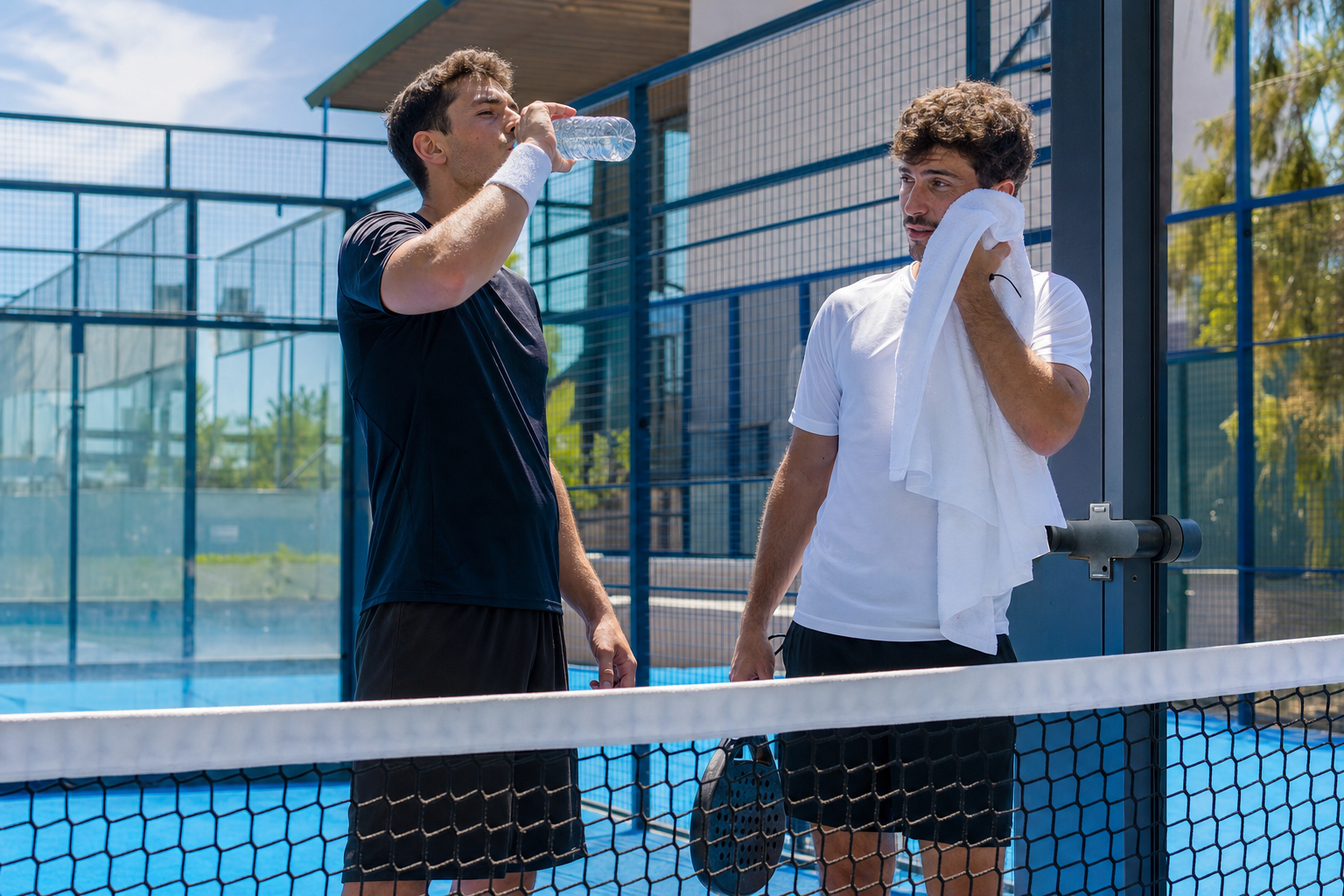
Sports science research recommends drinking regularly during effort, especially during changeovers, without waiting for thirst. In practice:
- drink before you feel thirsty, ideally with electrolyte drinks
- protect yourself from the sun between points
- avoid the hottest hours when you have the option
- adjust your intensity: playing more conservatively when your body heats up isn't a lack of competitiveness — it's tactical intelligence
3.Work on the shots that actually win points
Fundamentals before advanced technique
Summer isn't the ideal time to chase the perfect stroke. It's the right time to reinforce the fundamentals that consistently produce the most wins over time. If you want a detailed breakdown of which shots to work on at your level, see our guide how to improve at padel.
The 5 shots to consolidate first
- The defensive lob: deep, high, pushing opponents to the back
- The controlled bandeja: control before aggression
- The clean volley: 50% power, placement as the priority
- Recovery after the shot: returning consistently to within 1 m of the walls
- Patience in the rally: building the point before finishing it
The player who improves fastest is not the one who attempts the most winners. It's usually the one who makes fewer avoidable errors.
4.If you're stuck, it's not always a technical problem
The real blockers behind a plateau
Many players assume they lack technique, when the real blocker is usually something else:
- poor positioning on the court
- poor shot selection for the given situation
- difficulty defending after the glass rebound
- moving to the net too early on neutral balls
- lack of reading the opponent's game
Our article on defensive positioning in padel breaks down these structural errors in detail and explains how to fix them.
Find out what's actually holding you back
PadelIQ analyses your match video and gives you a precise diagnosis: positioning, decision-making, technique, consistency.
Try it freeThe limits of in-match feel
You can be technically solid and still lose points for the wrong reasons. That's why external feedback is a game-changer: when you watch your match, you understand much faster what's actually blocking you.
5.Film yourself: video analysis saves enormous time
What video reveals that feel hides
In a match, you sense a lot of things — but you rarely see the reality clearly. Video shows you:
What you'll discover when watching your matches
- your actual positioning relative to the net and walls
- your behaviour under pressure (rushed strokes, lost positioning)
- your recurring patterns (always playing the same side, always retreating)
- the errors you repeat without realising
- the moments when you lose control of the point
A single video session can be enough to identify your top priority work area. For a deeper dive, see our complete guide on padel video analysis.
AI-powered analysis
Traditional video review takes time and requires an expert eye. Tools like PadelIQ automate this process and deliver personalised recommendations after each match, with no coach required. This is often the breakthrough moment — seeing concretely what's not working — that allows you to train smarter, play better, and improve faster.
6.Build a summer improvement plan
Why you need a plan
Summer goes fast. Without a plan, you risk arriving in September with lots of matches played but few visible improvements. Sports psychology confirms that improvement accelerates when you work towards clear objectives and track your progress regularly.
A simple weekly structure
Here's a straightforward framework to repeat over several weeks:
- 1 match with a specific goal defined before you step on court
- 1 analysis of your game (video review or partner feedback)
- 1 tactical quiz or refresher to reinforce mental patterns
- 1 technical focus to repeat during warm-ups
- 1 mental or strategic observation to apply in the next match
Your plan doesn't need to be complex. It just needs to be consistent. For tactical patterns to build into your game, our article on 15 padel tactical patterns is an excellent starting point.
A good padel summer isn't about "playing whenever possible." It's about chaining the right actions in the right order. Without structure, even 20 summer matches can produce zero measurable progress.
7.Set a concrete end-of-summer objective
The right question to ask yourself
The best question isn't: "How many matches will I play this summer?"
The best question is: "What do I want to do better at the end of summer than I do now?"
Realistic goals achievable in 8 weeks
- defending wall rebounds more cleanly
- choosing between lob and low game depending on the situation
- holding your defensive diagonal without drifting to the centre
- moving to the net more intelligently, on the right balls
- giving away fewer free points from unforced errors
If you arrive in September with 2 or 3 visible improvements in your game, your summer will have been worthwhile. For players looking to go further, our guide on how to reach an advanced padel level lays out a complete roadmap with concrete weekly exercises. You can also check our pricing page for PadelIQ plans suited to your progression goals.
8.Frequently Asked Questions
How many matches per week should I play to improve in summer? Consistency beats volume. Two matches per week with a clear goal and a post-match review will be more effective than five matches played without intention. What matters most is the quality of attention brought to each session.
How do I avoid a plateau during the summer? By setting one specific work focus per match and varying your situations: alternate competitive matches, targeted practice sessions, and video analysis. Plateaus appear when you reproduce the same patterns repeatedly without external feedback.
Does heat really affect improvement at padel? Yes, heat directly impacts sharpness, positioning, and the quality of tactical decisions. Adjusting intensity, staying well hydrated, and avoiding the hottest hours are factors that directly influence the quality of your game and the learning that takes place during sessions.
9.Ready to make this summer a real period of growth?
Upload your first match video to PadelIQ and receive a complete analysis: positioning, decision-making, technique, consistency. The AI pinpoints exactly what's costing you points and what to focus on first.
1st analysis free. No credit card required