Top 5 Most Common Padel Mistakes and How to Fix Them
Avoid the most common padel mistakes that hold players back. Learn what errors beginners and intermediate players make and get practical tips to fix them fast.
Every padel player makes mistakes. That's part of the game. But some mistakes are so common and so costly that fixing even one of them can noticeably improve your results.
After analyzing thousands of matches, we've identified the five errors that show up most frequently among beginner and intermediate padel players. These same patterns are visible at every level, from local clubs to the World Padel Tour. If you recognize yourself in any of these, don't worry. Each one comes with a clear, actionable fix.
1.Mistake 1: Hitting Too Hard
This is the number one mistake in padel, and it affects players at every level. Coming from tennis or other racket sports, the instinct is to hit the ball as hard as possible. In padel, that instinct will lose you points.
Why It's a Problem
Padel courts are enclosed by walls and glass. A hard shot that misses its target doesn't sail out. It bounces off the walls and comes back, often setting up an easy ball for your opponent. Power without precision creates more opportunities for the other team than for yours.
The padel racket also has no strings, which means you have less control at high speeds. The harder you swing, the more margin for error you introduce.
How to Fix It
Focus on placement over power. Aim for the corners, the feet of your opponents, or deep into the court. A well-placed shot at 60% power is far more effective than a full-power blast that lands in the middle of the court.
Practice hitting with control by rallying at a moderate pace. Count how many consecutive shots you can place in a specific zone. Once placement becomes automatic, you can gradually add power without sacrificing accuracy.
2.Mistake 2: Poor Court Positioning
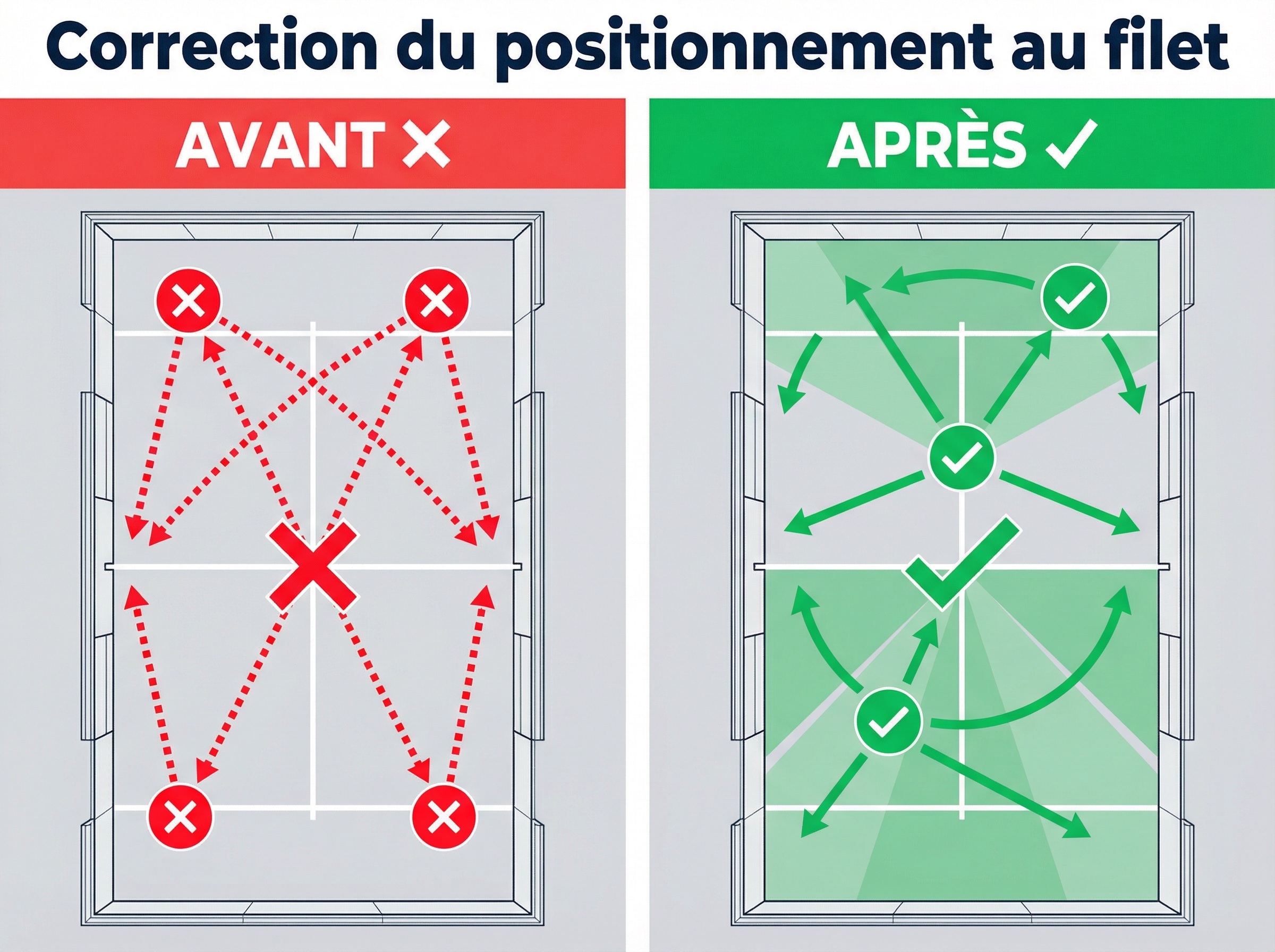
Padel is a game of geometry, and where you stand matters as much as how you hit the ball. Poor positioning is the silent killer of padel points.
Why It's a Problem
The most common positioning error is the gap between partners. When one player moves to cover a shot and the other doesn't adjust, a hole opens in the middle of the court. Experienced opponents will exploit this every time.
Another frequent issue is standing too far from the net. Many players hover in no-man's land: too far back to volley effectively, too far forward to handle a lob. This indecisive positioning puts you at a disadvantage on almost every ball.
Want to analyze your matches automatically?
PadelIQ uses AI to identify your improvement areas in minutes.
Try it freeHow to Fix It
Move as a unit with your partner. Imagine a rope connecting you both. When one moves left, the other follows. When one moves forward, the other does too. This synchronized movement eliminates gaps and keeps your court coverage solid.
As a general rule, you should be in one of two positions: at the net (about 2 meters from it) or at the back of the court. Avoid lingering in between. If you're unsure, default to the back and wait for a clear opportunity to approach the net.
Recording your matches and reviewing your positioning is one of the fastest ways to spot these errors. Tools like PadelIQ can highlight positioning patterns automatically, showing you exactly where you tend to leave space. Learn more about how padel video analysis can reveal these hidden patterns.
3.Mistake 3: Ignoring the Walls
The walls are what make padel unique, and ignoring them is like playing football without using your feet. Yet many players, especially those new to the sport, treat the walls as obstacles rather than allies.
Why It's a Problem
When the ball heads toward the back glass, inexperienced players either panic and try to hit it before it reaches the wall, or they freeze and let it die. Both reactions lead to weak returns or missed shots.
The side walls present a similar challenge. Players often don't anticipate the angle of the bounce, leading to mistimed shots and awkward body positions.
How to Fix It
Dedicate practice time specifically to wall play. Start with the back glass: have a partner lob balls to you and practice letting them bounce off the wall before hitting. The key insight is patience. Wait for the ball to come to you rather than chasing it into the glass.
For side walls, practice reading the angle. The ball will come off the wall at roughly the same angle it went in. Stand sideways to the wall, watch the ball's trajectory, and position yourself where it will arrive after the bounce.
A useful drill is to stand at the back of the court and have someone feed you balls that hit different combinations of walls. The more repetitions you get, the more natural your reads become. The International Padel Federation offers coaching resources that include wall play fundamentals.
4.Mistake 4: Neglecting the Return of Serve
The return of serve in padel doesn't get the attention it deserves. Many players treat it as a formality and just try to get the ball back in play. But a weak return immediately puts your team on the defensive.
Why It's a Problem
A short, high return gives the serving team an easy volley and lets them maintain their position at the net. Since the serving team starts with a positional advantage (both players at the net after the serve), a poor return extends that advantage and makes it nearly impossible to win the point.
Over the course of a match, losing the majority of return games creates a massive deficit that's hard to overcome. Studies in match analysis show that the return game is one of the strongest predictors of match outcomes in racket sports.
How to Fix It
Make the return deep and low. Your primary goal is to push the net player back or at least force a difficult first volley. Aim for the feet of the server's partner or deep into the corners.
The lob return is a powerful weapon that many players underuse. A well-executed lob over the net player forces both opponents to retreat, giving you and your partner time to take the net yourselves. Practice the lob return until it becomes a reliable option in your arsenal.
Vary your returns to keep opponents guessing. If you always go cross-court, they'll start anticipating it. Mix in down-the-line returns and lobs to create uncertainty.
5.Mistake 5: Playing Without a Game Plan
This might be the most overlooked mistake in recreational padel. Most club players step onto the court with no strategy beyond "hit the ball back." While that's fine for casual rallies, it's a recipe for frustration in competitive play.
Why It's a Problem
Without a game plan, you're reactive instead of proactive. You respond to what your opponents do rather than dictating the play. This means you're always one step behind, and you miss opportunities to exploit weaknesses.
It also leads to inconsistency. Without clear intentions, your shot selection becomes random: sometimes aggressive, sometimes passive, with no underlying logic connecting your decisions.
How to Fix It
Before every match, discuss a basic strategy with your partner. It doesn't need to be complicated. Answer three questions:
- Who is the weaker opponent? Direct more balls to that player.
- What's our best weapon? If you have a strong lob game, plan to use it. If your partner is lethal at the net, focus on getting them into a volleying position.
- What's our default play under pressure? When the point gets difficult, having a go-to pattern (like a deep cross-court followed by a lob) prevents panic decisions.
During the match, reassess between sets. Is your plan working? Do you need to adjust? The best padel partnerships constantly communicate and adapt. For a deeper dive into building a complete game plan, read our guide on how to improve at padel.
6.Turning Awareness into Improvement
Recognizing these mistakes is the first step. Fixing them requires deliberate practice and honest self-assessment.
One of the most effective approaches is to review your match footage with a specific mistake in mind. Watch an entire match asking only: "Am I hitting too hard?" or "How is my positioning?" This focused review reveals patterns that general watching misses. Our article on padel video analysis explains exactly how to build an effective review habit.
PadelIQ was built to accelerate exactly this process. By analyzing your matches with AI, it identifies which of these common errors are costing you the most points and provides specific, actionable guidance on what to change. Visit our pricing page to see available plans, or check the FAQ if you have questions about how it works.
Small adjustments lead to big results in padel. Fix one of these five mistakes, and you'll notice the difference in your very next match.
7.Data and statistics: common padel mistakes in context
Federations and field studies provide useful insight into the most frequent errors. Teaching bodies observe that amateur players underestimate the importance of positioning and communication in doubles, two pillars that are essential at the top level. On the World Padel Tour, match statistics show that a large share of points are lost on unforced errors (net, out) or poor tactical choices rather than missed shots. Among amateurs, AI analysis platforms aggregate anonymised data: "placement" and "decision" are the most common improvement themes, ahead of raw stroke technique. These figures confirm that fixing padel mistakes starts with objective awareness, then targeted work. Research on motor learning shows that visual feedback (video) improves retention of corrections much more than verbal advice alone.
8.Case studies: fixing padel mistakes with analysis
Case 1: Hitting too hard. A player was losing many points by sending the ball into the mesh or the glass. His PadelIQ analyses showed a very high rate of unforced errors on "attackable" balls. He followed the recommendation to play at 70% power and prioritise placement. In six weeks and three analyses, his unforced error rate dropped by around 40%. He gained consistency without losing effectiveness.
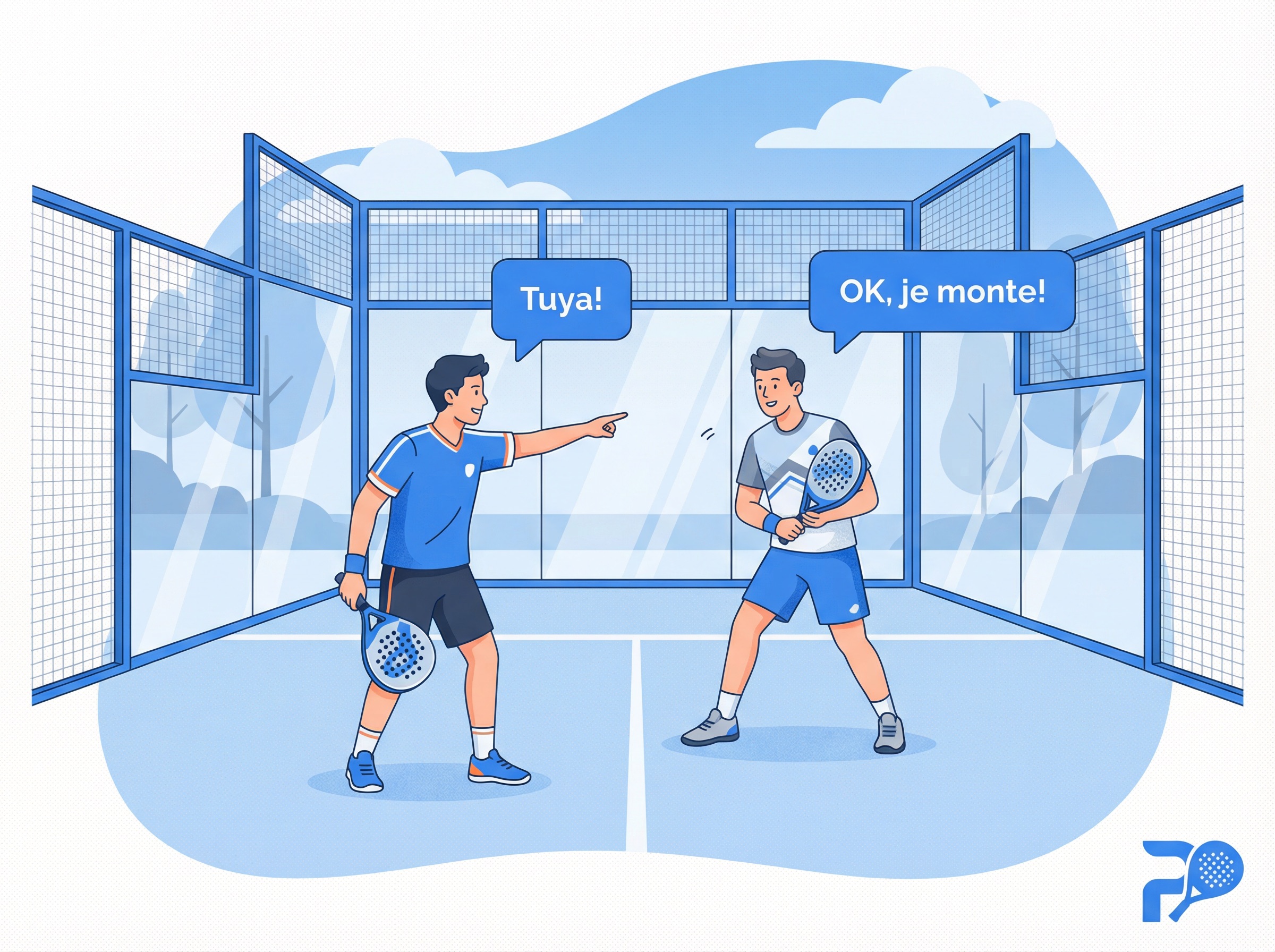
Case 2: Positioning and communication. A pair that often lost points "in the middle" (neither player taking the ball) used PadelIQ reports to see their positioning on the timeline. They became aware of their mismatch and introduced systematic calls ("mine", "yours"). They also worked on moving as a unit. Later analyses showed a clear reduction in points lost to communication errors. These two examples show how objective analysis helps identify and correct padel mistakes that seemed insurmountable.
9.Frequently Asked Questions
What is the most common mistake beginners make in padel? Hitting too hard is by far the most frequent error. Players coming from tennis or other racket sports instinctively swing for power, but padel rewards placement and control. Focus on directing the ball to specific zones at moderate pace before adding power.
How can I tell which mistakes I'm making if I can't see them during a match? The best way is to record your matches and review the footage. You can do this with a simple smartphone on a tripod. AI tools like PadelIQ take this further by automatically detecting your error patterns and giving you a prioritized list of what to fix first.
How quickly can I fix these padel mistakes? Most players see noticeable improvement within 2–4 weeks of focused practice on a single mistake. The key is to isolate one issue at a time rather than trying to fix everything at once. Track your progress by recording matches regularly. The visual proof of improvement is a powerful motivator.
10.Ready to take action?
Upload your first match video to PadelIQ and receive a complete analysis with personalized diagnosis, tailored exercises and progress tracking.
1st analysis free. No credit card required