Padel Video Analysis: Why It's Essential to Improve Your Game
Learn how padel video analysis and AI coaching tools can transform your game. Discover what to look for in your footage and how technology is changing padel training.
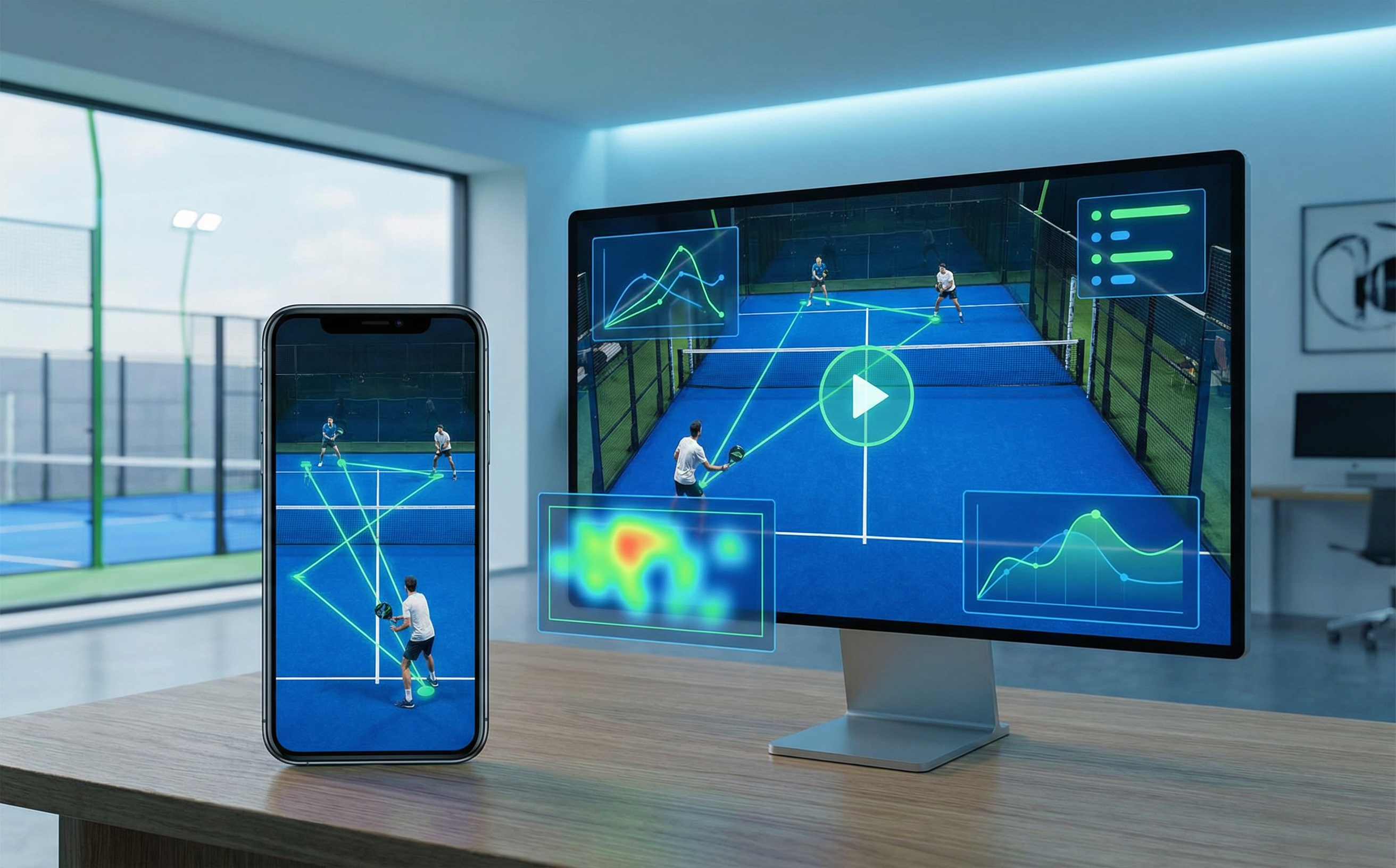
Professional athletes in every sport review footage for a reason. Video doesn't lie. It shows you exactly what happened, not what you think happened.
In padel, where positioning, timing, and shot selection matter as much as raw skill, video analysis is one of the most effective tools available to players who want to improve. Top players on the World Padel Tour use video review extensively, and with the rise of AI-powered coaching, it's no longer reserved for professionals with big budgets.
1.The Problem with Self-Assessment
Every padel player eventually learns this: you are a terrible judge of your own game.
When you're in the middle of a rally, your brain is processing dozens of variables: the ball trajectory, your opponent's position, your partner's movement, the walls. There's no bandwidth left for objective self-evaluation. After the match, your memory is selective. You remember the great winners and the frustrating errors, but the patterns in between, the ones that actually determine whether you win or lose, are invisible.
This is why a player can feel like they played well and still lose, or feel terrible about a match they actually won. Perception and reality diverge. Research in sports psychology consistently shows that athletes overestimate their strengths and underestimate their weaknesses without external feedback.
Video analysis closes that gap.
2.What Video Analysis Reveals
When you watch your padel matches on video, you start noticing things that are impossible to see in real time.
Positioning Errors
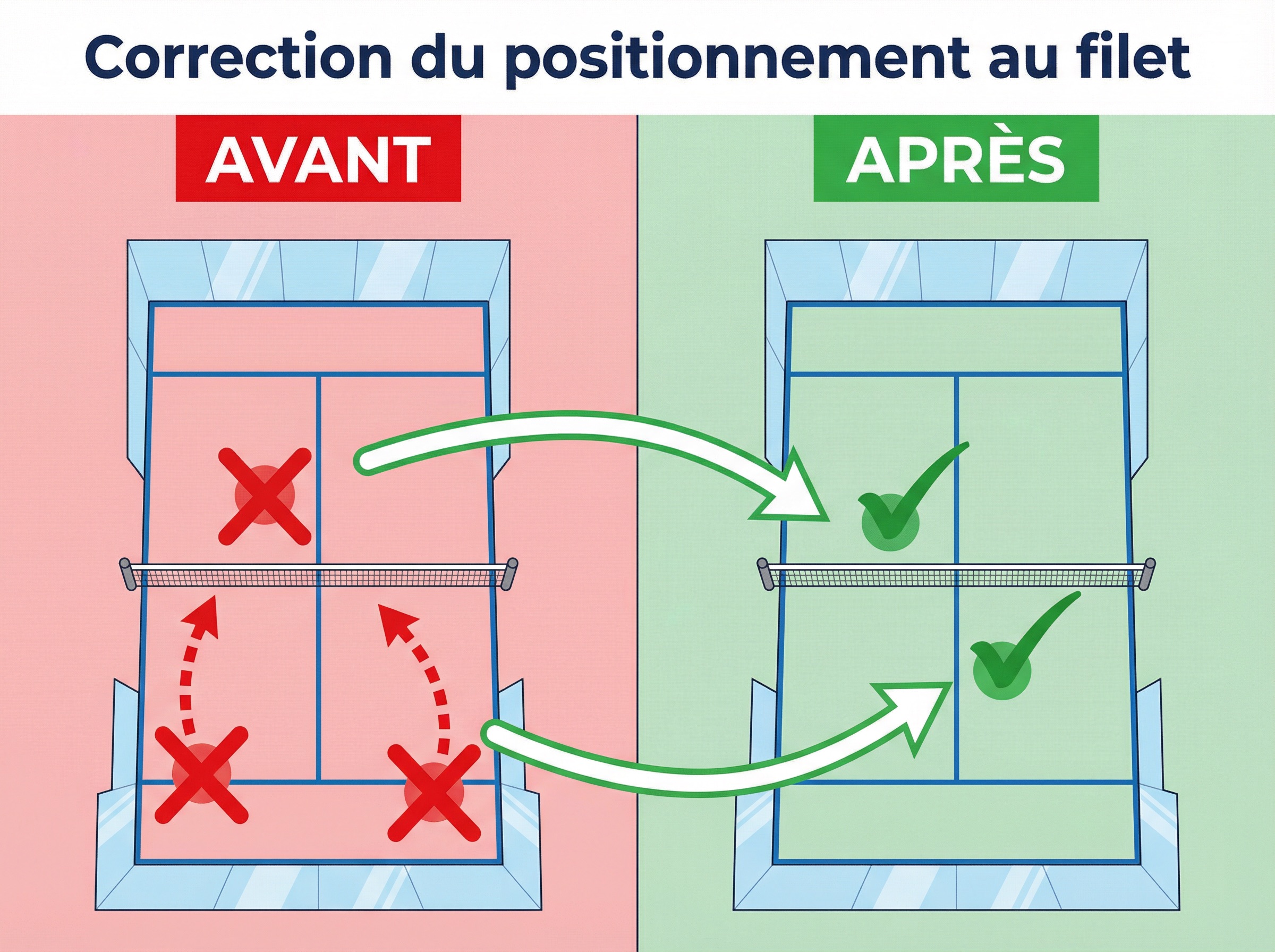
The most common issue video reveals is poor court positioning. Are you and your partner moving as a unit? Are you too far from the net when you should be pressing? Are you leaving gaps in the middle of the court? On video, these patterns become obvious. If positioning is a recurring problem, check out our guide on common padel mistakes for specific fixes.
Preparation and Timing
Slow racket preparation is one of the biggest limiters in padel. You might feel like you're getting ready early, but video often shows the racket coming up late, forcing a rushed, off-balance shot. Seeing this on screen makes it much easier to correct.
Shot Selection Patterns
Do you always go cross-court under pressure? Do you lob when you should drive? Do you try to hit winners from defensive positions? Video exposes your decision-making habits, both good and bad. Over several matches, clear patterns emerge that you can work on in practice.
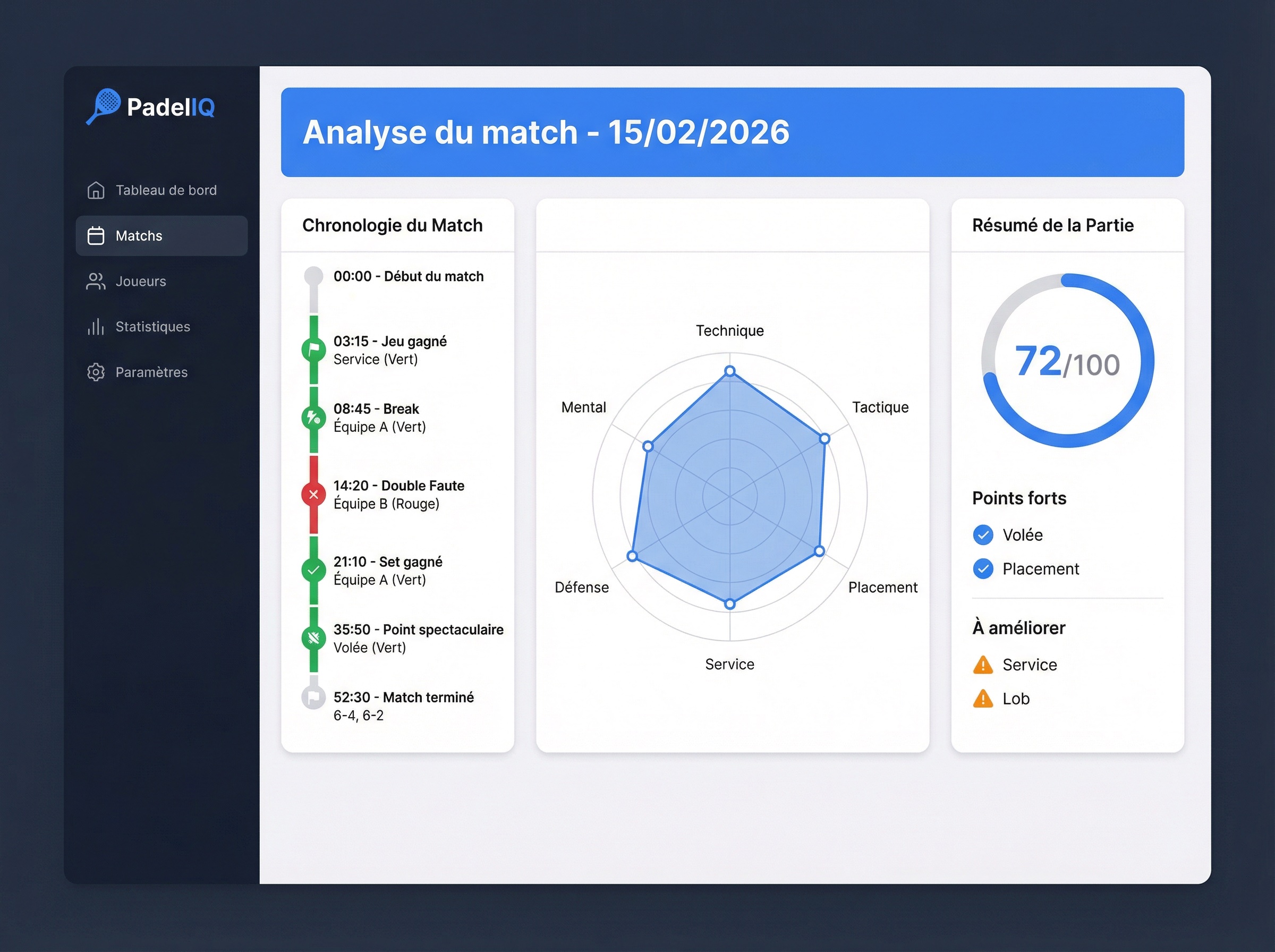
Want to analyze your matches automatically?
PadelIQ uses AI to identify your improvement areas in minutes.
Try it freeMovement Between Shots
Padel isn't just about what you do when the ball arrives. It's about what you do between shots. Video shows whether you're recovering to the right position, whether you're split-stepping before your opponent hits, and whether you're anticipating or just reacting.
Net Play Effectiveness
At the net, small details make a big difference. Are you closing the angle on volleys? Are you poaching at the right moments? Are you getting caught flat-footed by lobs? These micro-adjustments are hard to feel but easy to see on video.
3.How AI Is Changing Padel Analysis
Traditional video analysis requires either a knowledgeable coach or hours of self-review. Both have limitations. Coaches are expensive and not always available. Self-review is time-consuming, and most players don't know exactly what to look for.
This is where AI-powered padel analysis enters the picture.
Tools like PadelIQ use artificial intelligence to analyze your match footage automatically. Instead of scrubbing through an hour of video yourself, you get targeted insights delivered to you: where you're losing points, what technical adjustments to make, and how your performance compares to previous matches.
Objectivity at Scale
An AI doesn't get tired, doesn't have biases, and doesn't forget. It evaluates every point with the same rigor. Over time, this creates a detailed picture of your game that no human observer could match. It tracks trends across dozens of matches and identifies subtle shifts in your performance.
Personalized Feedback
The best coaching is specific to you. Generic advice like "move your feet more" is less useful than "you're arriving late on backhand volleys when the ball comes from the right side of the court." AI analysis can deliver this level of specificity because it processes the actual data from your matches. See our pricing plans to find the option that fits your training goals.
Accessibility
Not everyone has access to a high-level padel coach. AI analysis tools democratize expert-level feedback, making it available to club players, recreational competitors, and anyone with a smartphone and a desire to improve. The International Padel Federation has recognized technology as a key driver in the sport's global growth.
4.What to Look for When Reviewing Your Footage
Whether you're using AI analysis or reviewing footage yourself, here are the key areas to focus on.
Key Areas to Focus On
Before the Point Starts
Watch your positioning and readiness before the serve or return. Are you in the right spot? Is your body language alert and prepared?
During the Rally
Track your movement patterns. Are you and your partner in sync? Are you recovering to a good position after each shot? Notice your racket preparation. Is it early and consistent?
At Key Decision Points
Pay special attention to moments where you had a choice: lob or drive, go for the winner or play safe, stay back or move forward. Were your decisions appropriate for the situation?
After the Point
How do you react to winning or losing a point? Do you reset quickly, or do you carry emotion into the next point? Mental patterns show up clearly on video.
5.Building a Video Analysis Habit
The players who improve fastest are the ones who make video analysis a regular part of their routine.
A Practical Approach
- Record one match per week. A smartphone on a tripod behind the court is all you need. Position it high enough to capture the full court.
- Review within 48 hours. The sooner you watch, the better you'll remember the context of each point.
- Focus on one theme per review. Don't try to analyze everything at once. Pick one area (positioning, shot selection, or net play) and watch the entire match through that lens.
- Take notes. Write down two or three specific things to work on. Bring those notes to your next practice session.
- Track progress over time. Compare footage from a month ago to today. Seeing tangible improvement is one of the most motivating things in sport.
If manual review feels overwhelming, let PadelIQ handle the heavy lifting. Upload your match, receive your analysis, and focus your energy on the court instead of behind a screen.
Combine video insights with a structured improvement plan. Our guide on how to improve at padel walks you through building one step by step.
6.Data and statistics: video analysis in numbers
Research in sports science supports the impact of visual feedback on motor learning. Studies on observational learning show that combining demonstration with video feedback significantly improves technical retention compared to practice alone. In padel, while amateur usage data is scarce, professional circuits such as the World Padel Tour rely on systematic video analysis for match preparation. National federations increasingly integrate video into coach and player development programmes. Platforms that offer AI-powered analysis report growing adoption: users who complete at least four analyses in a season report a clearer understanding of their weaknesses and faster progress on targeted exercises. These trends suggest that video analysis is no longer a luxury for pros but an accessible tool for anyone who wants to structure their improvement.
7.Case studies: before and after analysis
Case 1: Improving recovery after the volley. An intermediate player used PadelIQ once a month. His reports consistently highlighted slow recovery after volleys. By reviewing the timeline and timecodes, he focused on recovery drills in practice. After three months, his analyses showed a clear drop in points lost due to "late recovery." He gained consistency at the net without changing his stroke technique.
Case 2: Identifying a defensive pattern. A player thought her main weakness was the smash. AI analysis revealed that the real issue was how often she gave away easy high balls in defence (short lobs, missed wall exits). By working on defence and lob first, as recommended by PadelIQ, she reduced opponents' smash opportunities. Later analyses showed fewer points lost on smashes received, then improvement on her own smash once defence was stronger. These examples show how video analysis helps prioritise what to work on and measure progress in concrete terms.
8.Frequently Asked Questions
Do I need professional equipment to record my padel matches? No. A smartphone mounted on a tripod or propped up behind the court is enough. Position it high enough (around 2–3 meters) to capture the full court. Many clubs also have built-in camera systems you can use.
How often should I review my match footage? Ideally, review at least one match per week. Consistency matters more than volume. Watching one match with focus is more valuable than skimming through five. AI tools like PadelIQ make this faster by highlighting the key moments automatically.
Can video analysis really replace a padel coach? Video analysis is a powerful complement to coaching, not a replacement. A coach provides real-time corrections and motivation that video can't. However, AI-powered analysis fills the gap between coaching sessions by giving you objective, data-driven feedback on every match. Check our FAQ page for more details on how PadelIQ works alongside traditional coaching.
9.Ready to take action?
Upload your first match video to PadelIQ and receive a complete analysis with personalized diagnosis, tailored exercises and progress tracking.
1st analysis free. No credit card required