How to Improve at Padel: The Complete Guide for All Levels
Discover proven strategies to improve at padel, from technique refinements to mental game mastery. Practical padel tips for beginners and advanced players alike.
Padel is one of the fastest-growing sports in the world. It's social, accessible, and rewarding. The International Padel Federation now counts over 25 million players globally. But once you've caught the bug, the question quickly becomes: how do you actually get better at padel?
Whether you're a beginner still finding your feet or an intermediate player looking to break through a plateau, this guide covers every dimension of improvement: technique, tactics, mental game, physical training, and the role of modern tools like video analysis.
1.Master the Fundamentals of Technique
Every great padel player is built on solid fundamentals. Before chasing flashy shots, make sure your basics are airtight.
The Ready Position
Your ready position dictates how quickly you can react. Keep your knees slightly bent, weight on the balls of your feet, and racket up in front of your chest. Too many players stand upright between shots and lose precious reaction time.
Wall Play
The walls are what make padel unique, and learning to use them is the single biggest unlock for most players. Practice reading the ball off the back glass by starting with simple lobs to yourself. Focus on timing your swing after the bounce rather than rushing into the shot. Struggling with wall play? It's one of the most common padel mistakes we see, and one of the easiest to fix with the right drills.
The Bandeja and Vibora
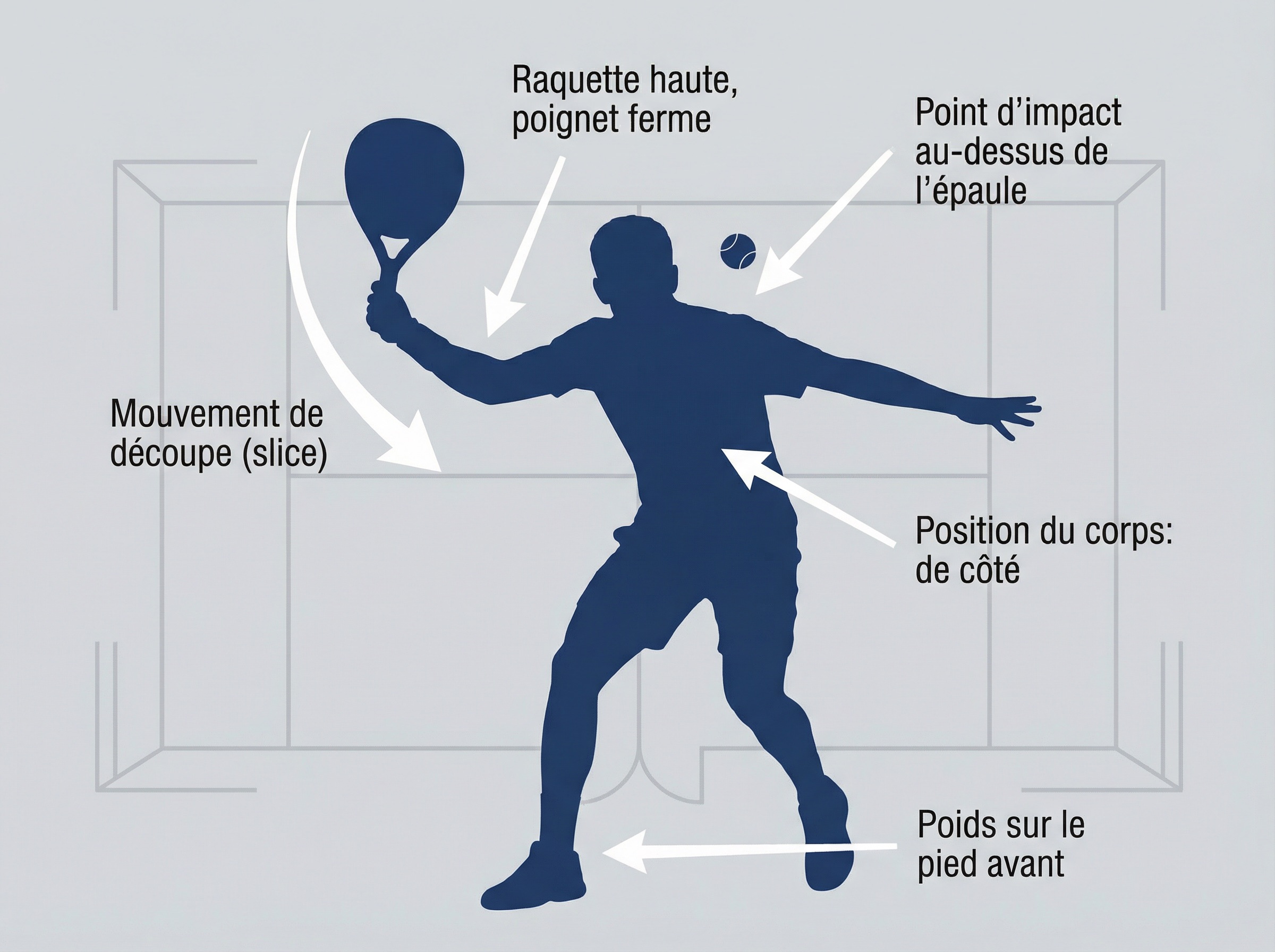
At the net, the bandeja is your bread-and-butter overhead. It's a controlled, sliced shot that keeps you in position. Once you're comfortable, progress to the vibora for more aggressive situations. Both shots require a continental grip and a relaxed wrist. Power comes from body rotation, not arm strength. Watch how the pros execute these on the World Padel Tour for visual reference.
Volleys
Clean volleys win points. Keep your swing compact, step into the ball, and aim for depth rather than power. A deep volley that pushes your opponents back is far more effective than a hard one that clips the net.
2.Develop Your Tactical Awareness
Padel is often called "chess at 100 km/h." Raw technique only gets you so far. You need a game plan.
Control the Net
The team that controls the net controls the point. After every successful return, look for opportunities to move forward. When you're at the net, stay patient. Wait for a short ball before going for the winner.
Play to Your Opponents' Weaknesses
Pay attention to which player is weaker, which side they struggle with, and whether they handle lobs or low balls poorly. Consistently targeting weaknesses is more effective than hitting spectacular shots.
Want to analyze your matches automatically?
PadelIQ uses AI to identify your improvement areas in minutes.
Try it freeCommunication with Your Partner
Padel is a doubles sport, and communication is everything. Call "mine" or "yours" on every ball. Discuss positioning between points. The best partnerships aren't always the most talented. They're the most coordinated.
Use the Lob Strategically
The lob is one of the most underrated shots in padel. A well-placed lob over the net player forces your opponents to retreat, giving you time to take the net. Don't just lob when you're in trouble. Use it as an offensive weapon.
3.Strengthen Your Mental Game
The difference between a good player and a great one is often mental. Padel matches are full of momentum swings, and the player who stays composed usually wins. Research in sports psychology confirms that mental resilience is one of the strongest predictors of competitive success.
Stay in the Present Point
It's easy to dwell on a missed shot or worry about the score. Train yourself to focus only on the current point. A simple reset routine, like adjusting your strings or taking a deep breath, can help you refocus between rallies.
Embrace Patience
Padel rewards patience. The average rally is longer than in tennis, and trying to end points too quickly leads to unforced errors. Trust the process: build the point, wait for the opening, then strike.
Handle Pressure Moments
When the score is tight, stick to what you know. This isn't the time to try a new shot. Go back to high-percentage plays: deep returns, controlled volleys, and smart lobs.
4.Train with Purpose
Hitting with friends is fun, but structured training speeds up improvement.
Drill Specific Situations
Dedicate practice sessions to specific scenarios: returning serve, transitioning from defense to attack, or playing out points from the back of the court. Repetition builds muscle memory.
Physical Conditioning
Padel demands lateral movement, quick changes of direction, and sustained energy over long matches. Incorporate agility ladder drills, short sprints, and core work into your fitness routine. Flexibility matters too. A good stretching habit reduces injury risk and improves your range of motion on court.
Play Against Better Opponents
Nothing accelerates growth like playing against people who challenge you. Seek out matches with players slightly above your level. You'll be forced to raise your game, and you'll learn by observing their shot selection and positioning.
5.Use Video Analysis to Accelerate Your Progress
One of the most powerful ways to improve at padel is to watch yourself play. Video analysis reveals patterns you can't see in the moment: a late preparation on the backhand, poor positioning after a lob, or a tendency to hit to the same spot.
Traditionally, this required a coach watching your footage and providing feedback. Today, AI-powered tools like PadelIQ make this process faster and more accessible. PadelIQ analyzes your match videos and delivers personalized coaching insights, highlighting exactly where you're losing points and what to work on next.
The advantage of AI analysis is consistency and objectivity. It doesn't miss patterns, and it tracks your progress over time so you can see whether your changes are actually working. See our pricing page for available plans.
6.Build a Long-Term Improvement Plan
Getting better at padel isn't about one magic tip. It's about consistent, deliberate effort across multiple areas.
A Simple Framework
- Assess your current level. Record a match and review it honestly (or let PadelIQ do it for you).
- Identify your biggest weakness. Focus on the one area that costs you the most points.
- Dedicate practice time. Spend at least one session per week working specifically on that weakness.
- Track your progress. Re-record and compare. Are you making fewer errors? Winning more points at the net?
- Repeat. Once you've improved one area, move to the next.
Padel improvement is a journey, not a destination. The players who enjoy the process and love getting a little better each week are the ones who ultimately reach the highest levels.
7.Data and statistics: padel improvement in numbers
National federations and teaching bodies publish indicators on padel growth: number of players, courts, and competitions. These figures show double-digit growth in many countries, with an increasingly diverse player base. Sports science research on motor learning indicates that structured practice (clear goals, regular feedback, varied situations) produces better long-term gains than purely intuitive play. The World Padel Tour and professional circuits use detailed match statistics (points won at the net, serve effectiveness, etc.) to guide training. At amateur level, players who combine matches, targeted drills, and video analysis report a better understanding of their improvement areas and more consistent practice. These numbers confirm that improving at padel benefits from a methodical approach and objective data, alongside the enjoyment of the game.
8.Case studies: improving with a structured approach
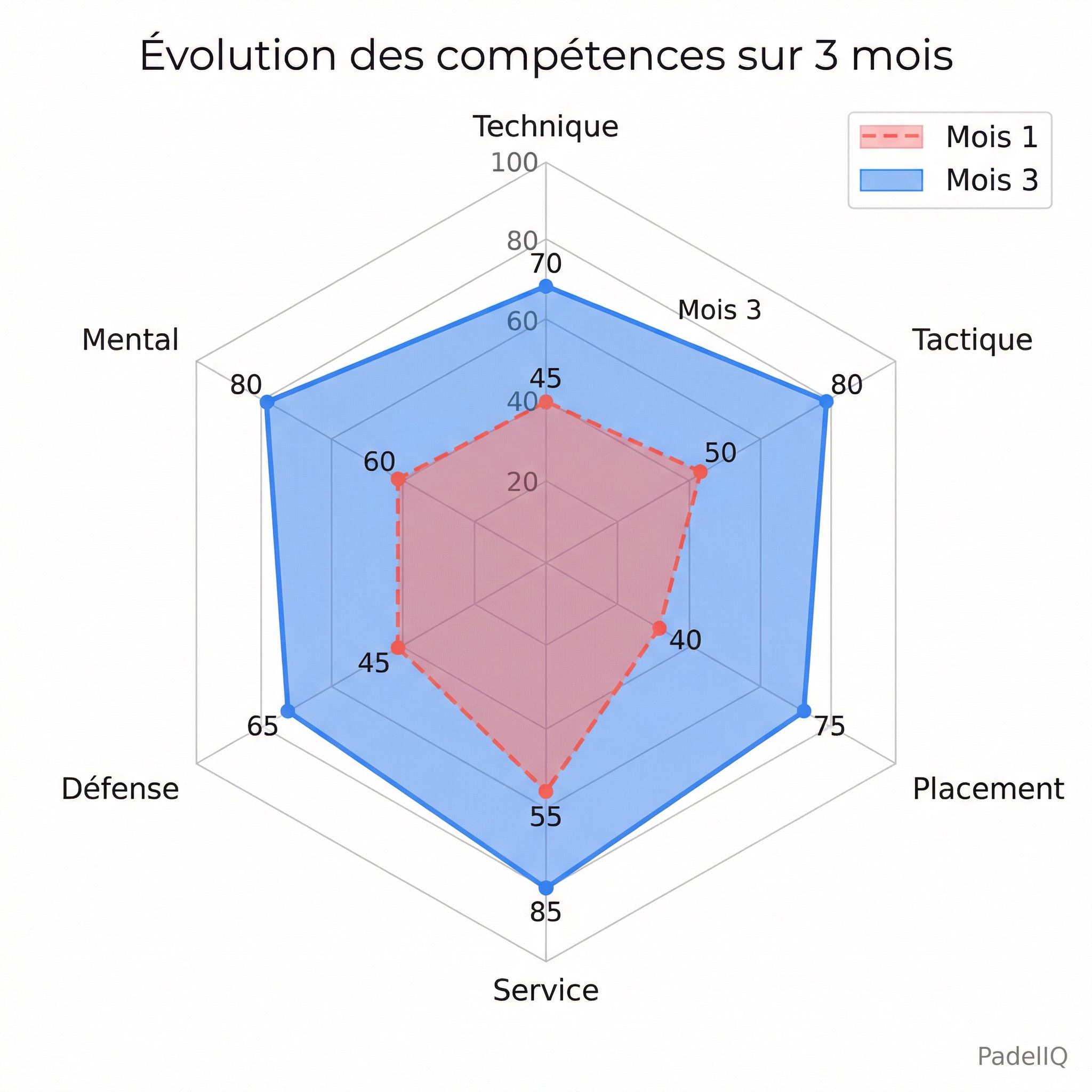
Case 1: From plateau to consistency. A level 4 player had been stuck for over a year. After using PadelIQ after each match, he identified that his main weakness was recovery after the volley. He followed the recommended exercises twice a week and completed four analyses over two months. His average score on "placement" increased from 52 to 71. He also built the habit of structuring sessions (warm-up, theme of the day, match) instead of only playing matches.
Case 2: Prioritising tactics. A technically strong but passive player worked on the "decision" dimension with PadelIQ quizzes and analysis feedback. Reports showed she was playing too often to the centre and not using short balls. By applying the tactical advice (aim at feet, open the court, move in after a winning shot), she saw a clear improvement in points won at the net. These two examples show that improvement at padel speeds up when you rely on data and a clear action plan rather than feel alone.
9.Frequently Asked Questions
How long does it take to see real improvement in padel? With focused practice 2–3 times per week, most players notice meaningful improvement within 4–6 weeks. The key is working on specific weaknesses rather than just playing matches. Using tools like PadelIQ to track your progress helps you stay on course and see the changes objectively.
Is it better to take lessons or play more matches to improve? Both have value, but the ideal approach combines structured coaching with match play. Lessons teach you correct technique and tactics; matches let you apply them under pressure. Adding video analysis bridges the gap by showing you exactly what to work on between sessions.
What's the single most impactful thing I can do to get better at padel? If you had to pick one thing, focus on court positioning and movement with your partner. Positioning errors account for more lost points than any technical flaw. Check our FAQ page for more tips, or read about the most common padel mistakes to see if any are holding you back.
10.Ready to take action?
Upload your first match video to PadelIQ and receive a complete analysis with personalized diagnosis, tailored exercises and progress tracking.
1st analysis free. No credit card required