Escape the No Man's Land: The Guide to Defensive Positioning in Padel (2026)
73% of points lost in padel come from poor positioning. Discover the one-meter rule, the 90/10 rule, and return-of-serve tips to boost your consistency.
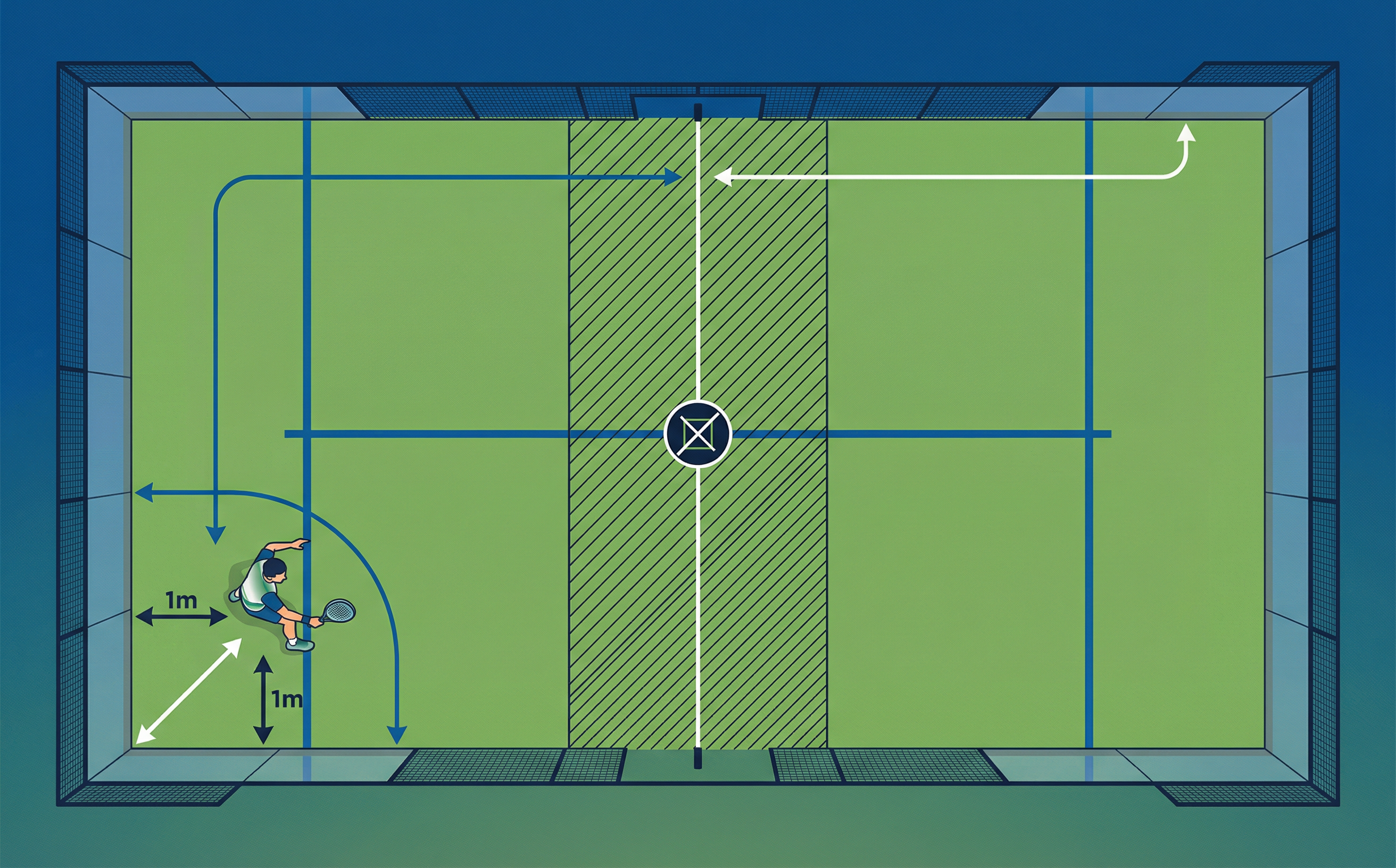
After analysing over 200 amateur matches, the conclusion is clear: most errors come from placement, not technique. In padel, unlike tennis, positioning matters more than power. This guide gives you the keys to defensive positioning to improve your consistency, survival in defence, and progress. For a broader framework, see how to improve at padel and our FAQ.
1.Why You Lose Points "Needlessly"
In defence, staying between the service line and the back glass is the number one cause of lost points. Balls land at your feet, reaction time is insufficient, and you hit off balance. The solution: position yourself 1 metre from the glass and apply the 90/10 rule (90% leg work, 10% racket) for better consistency. Pros on Premier Padel and the World Padel Tour apply these principles systematically.
2.The No Man's Land: The Forbidden Zone
What Is the No Man's Land?
No Man's Land is the area between 2 and 4 metres from the back glass. That's where a large share of defensive points are lost: balls at your feet after the bounce, too close to play comfortably, too far to use the glass, hitting off balance.
If you're stuck in this zone, play a safety lob immediately to reposition. Never go for a winner from this position.
Systematic Repositioning
Getting back to 1 metre from the glass after every shot must become a reflex. To measure your movement and repositioning, padel video analysis can pinpoint when you stay in No Man's Land too long.
3.The Optimal Defensive Position: The One-Metre Rule
Reference Placement
The defensive position used by top-level players:
- 1 metre from the side glass
- 1 metre from the back glass
- Feet shoulder-width apart, weight forward
- Racket high (chest height)
Why This Position Works
You play the ball after its bounce on the glass: more time and a comfortable height (waist or shoulder). The distance lets you cover cross-court, long, or short balls and hit in balance with a short preparation.
Quick drill: mark a 1 m × 1 m square in the corner. Goal: always return to it between each shot. Typical result: a clear gain in consistency over a few sessions.
4.The 90/10 Rule: The Secret of Solid Defenders
The Technique Myth
Many think that better racket technique alone will fix defensive issues. In reality, 90% of the work is done with the legs (placement, movement, adjustments) and 10% with the racket (simple block or push).
How to Apply the Rule
90% – Leg work:
- Reading the trajectory
- Short, explosive steps
- Constant repositioning in the safe zone
- Adjustments before the shot
10% – Racket technique:
- Short preparation (20–30 cm max)
- Flat push on the ball
- Contact in front of the body
- Minimal follow-through
Imagine a wall 50 cm behind you. This visualisation naturally shortens your preparation and encourages a compact push.
In short: the amateur prepares too much (tennis style), stays in No Man's Land, and looks for power. The advanced player prepares short, stands 1 m from the glass, pushes for control, and focuses on the legs first. Consistency improves sharply (often 40–60% in amateurs vs 75–90% in pros).
Want to analyse your positioning in match?
PadelIQ uses AI to identify your placement errors and areas for improvement.
Try for free5.Return of Serve: 5 Anti-Aggression Tips
The return of serve accounts for a large share of direct errors among amateurs. Here's how to make it more solid.
Tip 1: Move Closer to the Glass (50 cm)
Stand 50 cm from the side glass (you should be able to touch it with your racket). You cut the trajectory before an unpredictable glass bounce and reduce the court you have to cover.
Tip 2: Goalkeeper-Style Stance
Weight on the balls of your feet, heels off the ground, legs bent, weight forward, racket high (chest). This stance shortens reaction time.
Tip 3: The Block Technique
Avoid big backswings. Racket already in position, block the ball forward (15–20 cm of movement), firm contact, trajectory 30–50 cm above the net. Return consistency improves clearly.
Tip 4: Differentiated Tactics
- Fast first serve: block low at the server's feet as they move in, low trajectory; avoid the lob.
- Slow second serve: try a tactical lob, trajectory 2–3 m above the opponents, aim for the back of the court.
Tip 5: Reading the Server
Watch before the hit: ball toss (forward = fast, high = topspin), shoulder position (closed = cross-court, open = T serve), racket speed (fast = block, slow = you can lob).
6.Fatal Errors and Quick Fixes
| Error | Fix | |--------|--------| | Staying central on return | Stand 50 cm from the side glass | | Standing 3 m from the glass | Stay 1 metre max from both walls | | Big preparation | 20 cm prep + push | | Hitting with topspin in defence | Flat, driving ball | | Going for winner on return | Block low to opponent's feet | | Standing still after the shot | Return to the safe zone every time |
Three instant fixes: before each return, check you can touch the side glass (extended racket test). Count mentally "legs-legs-legs-RACKET" to lock in 90/10. On first serve, remember "block-low-feet". These are among the most common padel mistakes; fixing them quickly raises your level.
7.7-Day Action Plan
- Days 1–2: "magic square" drill (about 20 min), always returning to 1 m from the glass.
- Days 3–4: focus on 90/10 with mental counting.
- Days 5–6: around fifty varied returns with differentiated tactics (block on fast, lob on slow).
- Day 7: test match.
Measurable goal: increase ball retrieval and cut points lost from poor positioning within a few weeks. National federations and teaching structures stress the importance of positioning; structured practice delivers lasting results.
8.Frequently Asked Questions
How far from the glass in defence? 1 metre from the side glass and 1 metre from the back glass.
How to avoid No Man's Land? Reposition to 1 m from the glass after every shot. If stuck, play a safety lob.
What is the 90/10 rule? 90% of defensive work = legs (placement and movement), 10% = racket (short, flat push).
Block or lob on return? Block low on fast first serve. Lob on slow second serve.
Why move closer to the glass on return? To cut the trajectory before the glass bounce and reduce the court to cover.
9.Ready to Take Action?
Upload your first match video to PadelIQ and get a full analysis with a personalised report, tailored exercises, and progress tracking.
First analysis free, no card required