The Ultimate Padel Guide: From Beginner to Competitor (2026)
Complete 2026 padel guide: history, rules, equipment, technique, tactics, mental game, physical prep, structured training and AI video analysis. Everything to progress from your first shot to competition.
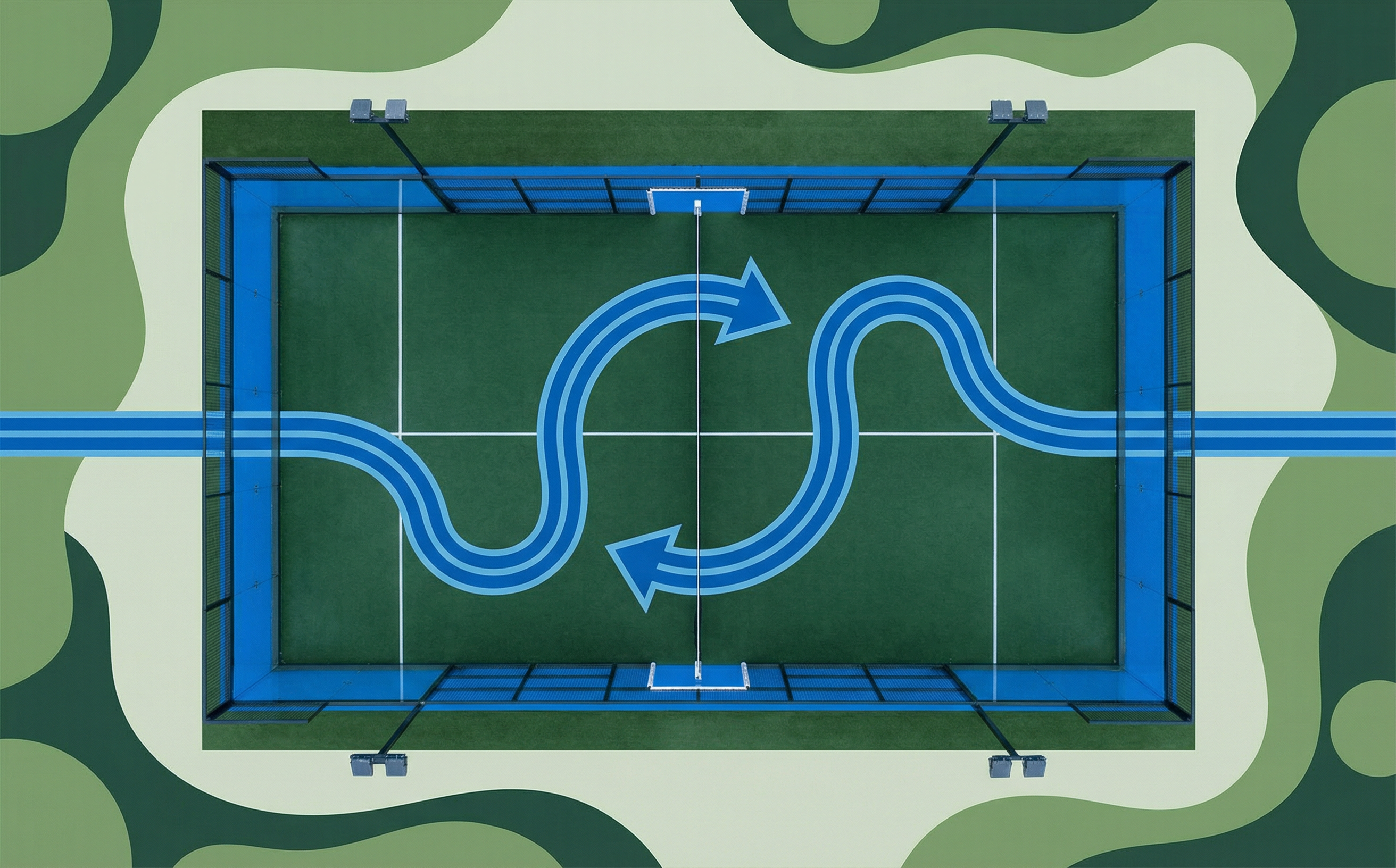
Padel has established itself as one of the most popular racket sports in the world. In France, the French Tennis Federation reports continued growth in the number of licensed players and courts. Whether you are new to padel or already aiming for competition, this 2026 guide takes you from A to Z: from your first shots to the strategies of experienced players. You will find the history of padel, rules and the court, equipment, technical basics, doubles tactics, mental game, physical preparation, structured training, video analysis and AI, as well as pointers for competition and your progression resources. Each chapter is designed to be read on its own or in order, with links to our dedicated articles and official sources. To go further on day-to-day improvement, read our article how to improve at padel and the FAQ for common questions on training and analysis. The International Padel Federation (FIP) sets the official rules used in international competition.
1.History of padel
Origins and global spread
Padel was born in Mexico in 1969, invented by Enrique Corcuera at his residence in Acapulco. The sport combines an enclosed court, glass walls and a solid racket (no strings) for fast, fun and accessible play. The idea was to create a smaller playing space than a tennis court, where wall rebounds are part of the game. It first developed in Spain and Argentina in the 1970s and 1980s, then across Latin America and Europe. Today, the World Padel Tour attracts millions of viewers and padel is recognised by national federations, including the French Tennis Federation in France. The International Padel Federation (FIP) coordinates rules and international events. The history of padel on Wikipedia traces key dates and the spread of the sport around the world.
Padel in France today
In France, padel has seen major growth since the 2010s. The number of courts and clubs has soared: indoor and outdoor courts, padel schools and training centres are multiplying in all regions. The FFT integrates padel into its offer and runs official competitions, training for coaches and a national ranking. Players are increasingly diverse: beginners, tennis players in transition, and seasoned competitors. To understand the mistakes to avoid when starting out or moving up a level, see our article on common padel mistakes. If you want to structure your progression from the start, our guide how to improve at padel and the FAQ will give you concrete benchmarks.
Why this guide in 2026
In 2026, training methods have evolved: video analysis, AI coaching and match data complement traditional teaching. Players can rely on digital tools to identify weaknesses and track their progress. This guide sums up current best practices for beginners and competitors alike, with links to our resources, FAQ and dedicated articles (technique, tactics, video analysis) to go further.
2.Rules and court
Court dimensions and features
The padel court is 20 metres long by 10 metres wide, half the surface of a tennis court. It is surrounded by walls (glass or solid) off which the ball can bounce: this is what sets padel apart from tennis and squash. The net is 88 cm at the centre and 92 cm at the ends. The surface is often artificial grass or resin, which affects speed, bounce and footwork. Lines (service boxes, alleys) mark the playing zones. The FFT and FIP publish the official specifications for approved courts. Knowing the court and zones (net, baseline, walls) is essential for tactics and positioning, as we detail in how to improve at padel. On a resin court the ball slides more and bounces lower; on artificial grass the bounce can be higher and slower. Adapting your game to the surface is part of the player experience. For positioning patterns, see our article on common padel mistakes and the FAQ.
Basic rules of play
Scoring is the same as tennis: 15, 30, 40, game, set and match. The serve is underarm, diagonal, with one bounce in the opponent's service box. The ball can hit the walls after bouncing on the floor: that is the hallmark of padel and a source of endless strategy. A ball that leaves the court after touching the floor is out; if it bounces off a wall first within the court, it stays in play. For full details (let, fault, dead ball, tie-break), see the FAQ or padel rules on Wikipedia. Knowing the rules helps you avoid common mistakes in matches and unnecessary disputes. Our resources page offers links to official rulebooks.
Doubles and communication
Padel is almost always played in doubles. Communication with your partner (who takes the ball in the middle, who covers the lob, who moves to the net) is crucial. Positions (who is at the net, who stays back) are managed according to the ball and the shot played: a well-coordinated team multiplies tactical options. To go deeper on tactics as a pair, see the tactics section below and our guide how to improve at padel. The FAQ also answers common questions on doubles play.
3.Equipment
The padel racket
Racket choice depends on level and playing style. Beginners tend to prefer round or teardrop shapes, more forgiving with a larger sweet spot, which reduces vibration and improves consistency. Advanced players often choose diamond rackets for more power and control at the net, at the cost of a more demanding hitting zone. Weight (usually 350–380 g), balance (head-heavy or handle-heavy) and core (EVA, foam) affect feel, manoeuvrability and racket lifespan. See our resources page for comparisons and buying tips, and the FAQ for common questions on equipment. A poor racket choice can reinforce common mistakes (e.g. uncontrolled power).
Balls and shoes
Padel balls are similar to tennis balls but with slightly lower pressure under FIP standards; they are approved for competition. Shoes suited to the court (non-marking sole, lateral stability, good cushioning) reduce slipping and ankle or knee injuries. Comfortable clothing and a well-maintained grip or overgrip complete your kit and improve control. For getting started without overspending, the FAQ answers questions on minimum equipment. Worn or under-inflated balls affect bounce and consistency; replacing them regularly is part of serious practice.
Where to buy and what to prioritise
Specialist shops, online stores and clubs offer rackets and accessories. To improve, equipment matters less than consistency and method: a well-suited mid-range racket is enough to move up. Investing in video analysis (e.g. with PadelIQ) can bring more progress than changing rackets. Check our pricing for match analysis and our article how to improve at padel to prioritise technique and training.
4.Technical basics
Ready position and footwork
A good ready position (knees bent, weight forward, racket in front) and reactive footwork are the foundation of solid play. Movement in padel is short and explosive: work on lateral steps, small adjustment steps and recovery after each shot. Without a solid base, the most technical shots will not be enough in a match. This is one of the pillars covered in how to improve at padel. The FAQ and our resources offer targeted footwork exercises.
Essential shots
Serve and return
The serve is underarm and should be consistent and well placed diagonally; it starts the rally without being a direct scoring weapon like in tennis. The return aims to put the ball back in play and, ideally, prevent the opposing team from moving to the net. A low, cross-court return is often most effective and creates chances to take the net yourself. To avoid underperforming on serve and return, see our article on common padel mistakes.
Bandeja, lob and volley
The bandeja (overhead defensive shot) lets you hold the net without taking too many risks; many players neglect it in favour of the vibora, which is more aggressive but less consistent. A well-executed lob pushes the opponent back and lets you move in: aim for depth and height rather than power. The low volley at the net helps you build the point, as most balls arrive below hip height. These three shots are detailed in our article on common padel mistakes to avoid classic pitfalls. For a tailored training programme, see how to improve at padel and our resources.
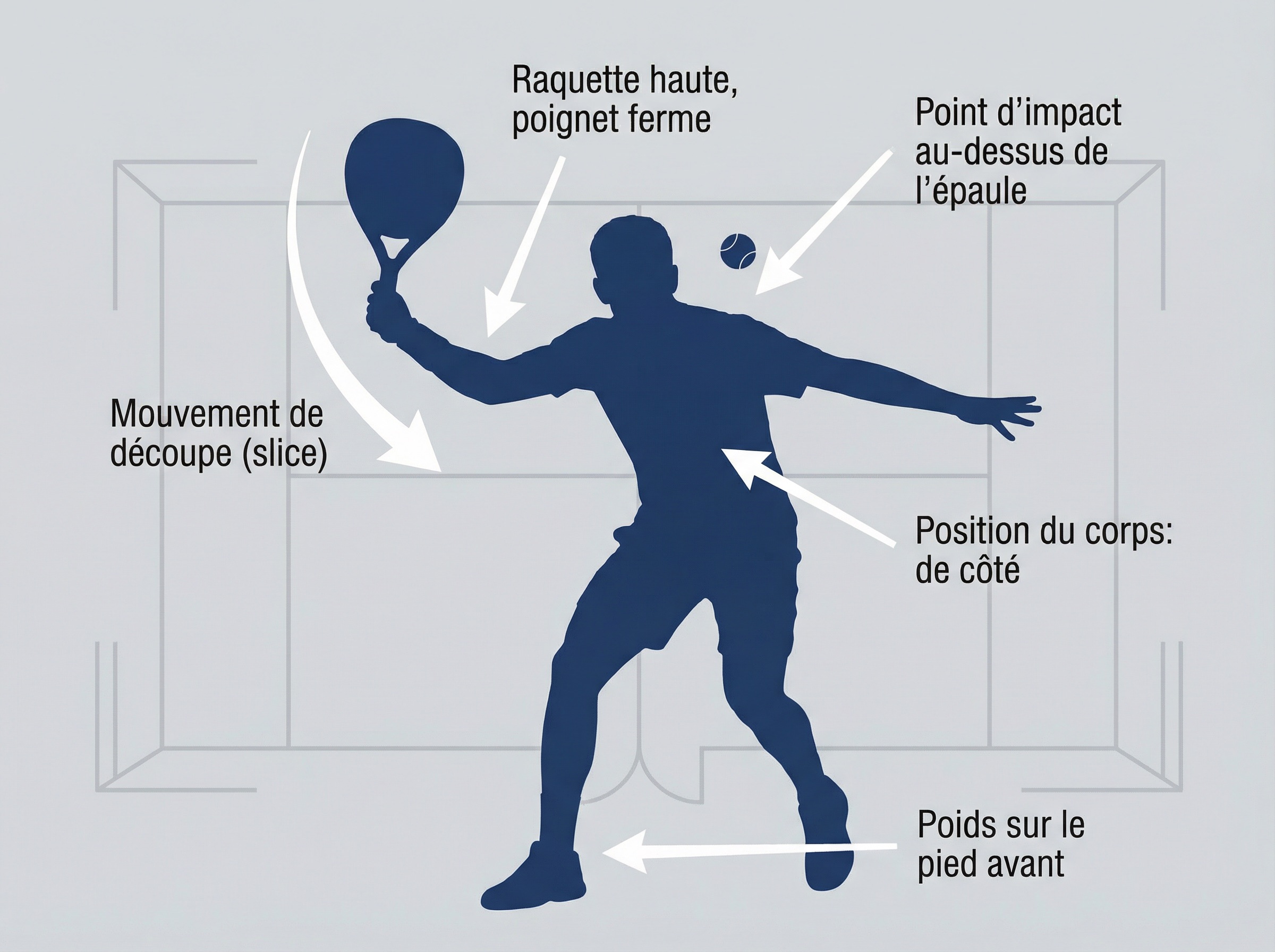
Wall play
Walls are what make padel unique. Learning to read bounces (back wall, side walls) and to hit the ball coming off the wall or after a floor bounce opens up tactical options that other racket sports do not have. Start with simple drills (ball against the wall, hitting on the way out) to develop timing and trajectory reading. With experience, you will anticipate wall exits and use them to build or finish the point. For a structured programme, see the training section and our resources. Video analysis also helps identify your habits on wall play and correct them. Over time you will develop a natural reading of trajectories and anticipate wall exits to gain the upper hand in the rally. World Padel Tour players master these bounces and use them to build or finish points.
5.Doubles tactics
General principles
Doubles tactics rely on positioning, patience and building the point. Playing to the centre of the opponents' court creates confusion, causes communication errors and reduces attacking angles. Moving to the net at the right time (after a deep lob, a ball at the feet, a low return) lets you dominate the rally; moving at the wrong time leaves you exposed to the lob or passing shot. World Padel Tour players illustrate these principles in every match. To go further, our guide how to improve at padel details tactical patterns and the FAQ answers questions on playing as a pair.
Who takes the ball in the middle
Communication ("mine", "yours") avoids both going for the ball or leaving it. As a rule, the player whose backhand is in line with the ball takes the shot, unless you agree otherwise (e.g. if one of you has a stronger volley in the middle). Defining a simple rule before the match limits common coordination mistakes and frees your mind for play. For examples of patterns and doubles drills, see our resources and the FAQ.
Varying rhythm and opening the court
Changing rhythm (lobs, chiquitas, accelerations) unsettles the opponent and creates openings. Opening the court (angles, short balls) creates space to finish the point or force an error. Combine these ideas with a well-chosen move to the net, as explained in how to improve at padel. See the FAQ for tactical pattern examples and our resources for doubles exercises. Avoiding common positioning and decision errors strengthens tactical effectiveness.
6.Mental game
Managing pressure and frustration
Padel is a sport where you lose many points. Accepting mistakes and focusing on the next point is a key skill: dwelling on a fault hurts the next one. Emotional management directly affects performance, as shown by sport psychology research. Set process goals (execute a shot well, recover position well) rather than only winning the point. In competition, this approach reduces stress and improves consistency. For concrete advice on the mental side of doubles, see common padel mistakes and how to improve at padel.
Relationship with your partner
In doubles, your relationship with your partner is decisive. Encourage each other, communicate clearly (who takes the ball, who covers, when to move in) and avoid blame during the match. A climate of trust improves decisions and consistency: pairs who talk and support each other perform better under pressure. A simple "mine" or "yours" on centre balls avoids dozens of lost points per match. To go further on communication, see common padel mistakes and how to improve at padel. The FAQ also covers common questions on playing as a pair.
Having a game plan
Going onto the court with an intention (e.g. target the left player's backhand, favour the lob to move in) gives you a framework and reduces hesitation in key moments. Adjust this plan as the set unfolds and according to the opponents' reactions. Our resources and video analysis help you identify patterns to repeat or correct. The FAQ and our pricing for AI analysis complete this work on the mental and tactical side.
7.Physical preparation
Why physical prep matters
Padel demands a lot from your legs, core and shoulders: accelerations, changes of direction, overhead shots and low volleys. Appropriate physical preparation improves power, endurance and injury prevention (shoulder, elbow, knee). It complements time on court and is useful as soon as you play more often or aim for competition. The FFT and clubs offer dedicated content and camps. For balanced training, see how to improve at padel and our resources.
Strength and mobility
Squats, lunges, core work and shoulder work (resistance band, light weights) strengthen the chains used in padel without overloading the joints. Stretching and mobility (hips, shoulders) preserve range of motion and reduce tension. Physical preparation in racket sports is well documented: favour consistency over occasional intensity. For a personalised programme, a strength and conditioning coach or club coach can guide you. See our FAQ for exercise ideas suited to padel.
Recovery and hydration
Recovery (sleep, nutrition, hydration) is part of preparation. Hydrating well before, during and after the match, and adjusting intensity according to fatigue, helps you last and limits injury. A player who strings together too many matches without recovery often drops in technical quality and decision-making. To learn more about balanced training, see the next section and how to improve at padel. The FAQ offers practical tips for combining padel, work and recovery.
Want to analyse your matches automatically?
PadelIQ uses AI to identify your areas for improvement in minutes.
Try for free8.Structured training
Consistency over intensity
Consistency (2 to 3 sessions per week) beats short bursts of intensity followed by long breaks. Progress depends on repetition and building automatisms: the body and brain integrate movements better when they are repeated over time. Plan your slots in advance to lock in the habit. To track this progress objectively, video analysis and tools like PadelIQ let you measure improvement. See our pricing and the FAQ.
Alternating matches and drills
Do not only play matches: devote at least one session in three to drills (wall play, cross-court volleys, serve/return, bandeja in situation). These focused sessions improve technique and tactics faster than free play alone, because you repeat specific situations. For drill ideas, see our resources and the FAQ. Our article how to improve at padel details how to alternate matches and technical work to avoid common mistakes.
Goals and tracking
Set short-term goals (e.g. improve the bandeja, communicate better in the middle, move to the net after every successful lob). Video analysis lets you measure progress and adjust session content based on reports (positioning, decision-making, technique). For structured tracking with AI, discover PadelIQ and our pricing. The FAQ explains how to integrate analyses into your training routine. In short: consistency, alternating matches and drills and measurable goals are the three pillars of effective structured training. The more you repeat specific situations (bandeja, low volley, centre communication), the more these actions become automatic in matches. Our article how to improve at padel details examples of session planning.
9.Video analysis and AI
Why film yourself
Filming yourself in a match reveals patterns you cannot see live: slow recovery, tendency to play to the same side, poorly timed move to the net, late racket preparation. Video analysis is a powerful lever for improvement, long used in professional tennis and football and now accessible to padel players. As we explain in video analysis in padel, video takes you from subjective feeling to observable facts. The FAQ and our resources complement this topic.
What video reveals
When you watch your matches, you see your real positioning, the quality of your movement, the moments when you lose the most points and the patterns opponents exploit. This information helps you build a targeted improvement plan and avoid common mistakes. You can also compare your sequences with the advice in how to improve at padel to prioritise what to work on. Sports science research shows that visual feedback speeds up motor learning.
What artificial intelligence adds
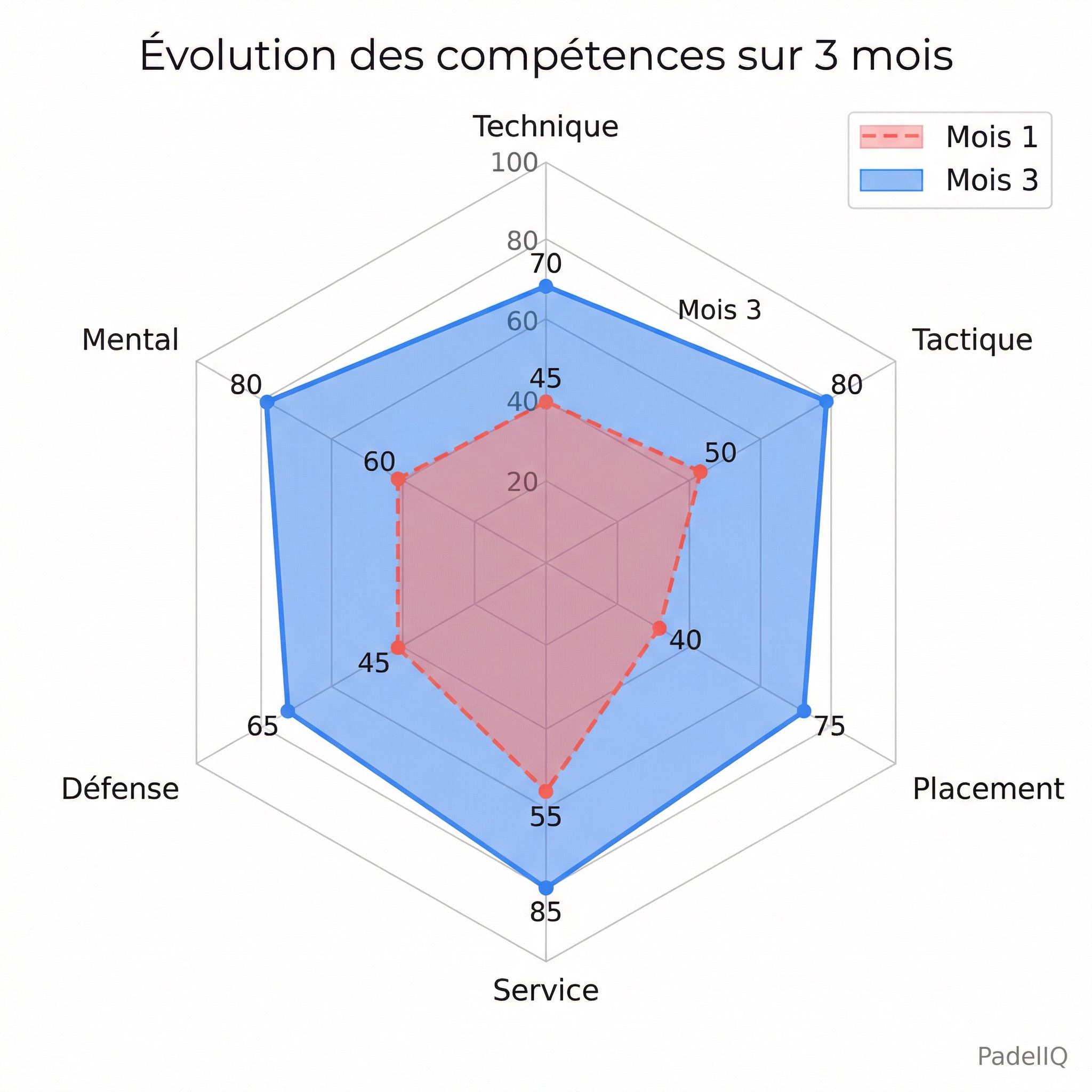
AI automatically analyses your videos and gives personalised recommendations: strengths, areas to improve, adapted exercises. PadelIQ offers this type of analysis to save time and get objective feedback after every match, without needing a coach every session. You receive a structured report with game dimensions (positioning, decision-making, technique, etc.) and tracking over time. See the FAQ and our pricing to find out more. The World Padel Tour and professional teams already use advanced analysis tools; AI makes this approach accessible to amateurs.
10.Competition
Moving from leisure to competition
Competition formalises your level (FFT ranking, club tournaments, inter-club) and gives concrete goals. Start by entering leisure or open tournaments to get used to the format, pressure and officiating. The FFT and regional leagues publish calendars and entry details. To approach competition calmly, work on mental and tactics (see the dedicated sections) and use video analysis of your tournament matches to see what worked or not under pressure. The FAQ and our resources can help you prepare for your first competition. Finally, choose a partner you communicate well with and share coherent goals with: cohesion in doubles is often the key to good results. To avoid tournament pitfalls, reread common padel mistakes.
Mental and tactical preparation
In competition, mental and tactics count as much as technique. Work on stress management, communication with your partner and a simple game plan before stepping on court. Video analysis of your tournament matches helps identify what to work on before the next event: positioning under pressure, shot choices in tight score situations, recovery after the volley. To avoid classic competition pitfalls, reread common padel mistakes and the FAQ. A physical and technical warm-up before the first match, and routines between points (breathing, glance at the racket), help you stay focused throughout the tournament day.
Ranking and progression
Your ranking reflects your level and changes with results. To progress in competition, combine matches, targeted training and objective feedback (coach or AI analysis). Tracking with PadelIQ after your tournament matches lets you capitalise on every outing. Our articles how to improve at padel and common padel mistakes complete this section. The World Padel Tour remains a reference for watching top-level play and drawing inspiration from the tactics of the world's best players.
11.Resources and progression
Online content and tools
FFT websites, YouTube channels, blogs and apps offer tutorials, drills and advice. Use these resources to vary your sessions and deepen technique and tactics. Our resources page centralises useful links for your progression. Combine this content with regular tracking (lessons, video analysis, how to improve at padel) for structured progress. The FAQ and our pricing answer questions on using PadelIQ day to day. Specialist channels and sites often offer exercises by level (beginner, intermediate, advanced): choose content suited to your stage so you do not spread yourself too thin. Official references such as the FFT and FIP also publish guides and news to stay informed on rules and developments in the sport.
Lessons and coaching
Lessons with a coach speed up learning the basics and correcting faults in real time. AI video analysis complements lessons by giving feedback after every match, even when the coach is not there: you keep a thread between sessions. To see how PadelIQ fits into your training, see the FAQ, how to improve at padel and our pricing. The combination of lessons and video analysis is popular among players who improve quickly.
Long-term tracking
Regular tracking (training log, video analyses, quarterly goals) structures progression and avoids plateauing. PadelIQ lets you follow the evolution of your game dimensions over time with clear reports and charts. See our pricing and homepage to get started. The FAQ and our resources help you set realistic goals and stick to them.
12.Conclusion
This ultimate padel guide 2026 has taken you from history and rules to equipment, technical basics, doubles tactics, mental game, physical preparation, structured training, video analysis and AI, competition and resources. Whether you are a beginner or competitor, consistency, a clear method and objective feedback (video, coach, data) are the pillars of lasting progress. Padel is demanding but accessible: by applying the principles in this guide (consistency, basic technique, doubles tactics, mental, physical prep, structured training) and using tools like video analysis, you give your practice direction. Whether you aim for leisure or competition, the resources and method described here support you from your first shot to tournaments. Remember that progress takes time: set realistic goals and celebrate small wins. In summary, the ultimate padel guide 2026 rests on twelve pillars: history, rules, equipment, technique, tactics, mental, physical preparation, structured training, video analysis and AI, competition, resources and conclusion. By integrating them step by step into your practice, you build a solid, lasting foundation. To get started, upload your first video on PadelIQ and see our pricing and the FAQ. Revisit the dedicated articles: how to improve at padel, video analysis in padel, common padel mistakes, and use the FAQ and resources. The International Padel Federation and the FFT remain the official references for rules and padel news.
13.Frequently Asked Questions
What is the best age to start padel? There is no ideal age. Padel is accessible from childhood and can be played at any age thanks to a smaller court, less violent exchanges than tennis and progressive learning. The FFT offers programmes for juniors and adults. What matters is to start with sound basics (see how to improve at padel) and to practise regularly. See our FAQ for more answers.
Do you need to be very fit to play padel? No. You can start with modest fitness. The smaller court and doubles limit extreme movement. Physical preparation becomes useful when you increase frequency (3 or more sessions per week) or aim for competition. For advice suited to your level, see our resources, how to improve at padel and the Physical preparation section of this guide.
How do you choose between lessons and AI video analysis? Lessons are ideal for the basics and live correction with a coach. AI video analysis (like PadelIQ) gives feedback after every match and tracks game dimensions over time. The two are complementary: lessons set the fundamentals, video analysis lets you apply and measure them between sessions. See our pricing and the FAQ to find out more about AI analysis.
14.Ready to take action?
Upload your first match video on PadelIQ and receive a full analysis with a personalised diagnosis, adapted exercises and progression tracking.
First analysis free, no card required